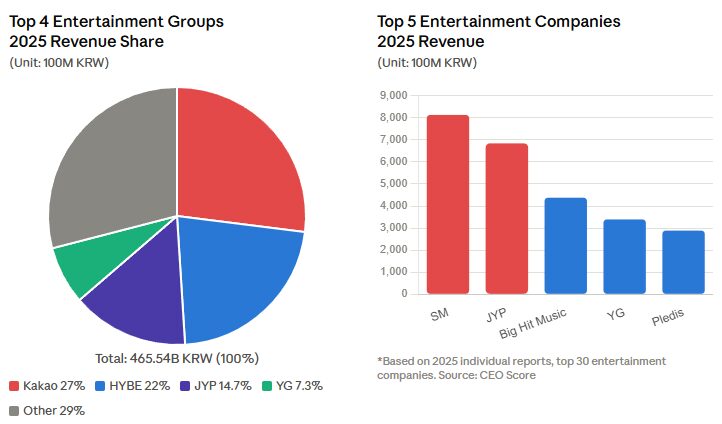
The K-Pop landscape is constantly shifting, and a major shake-up has just been confirmed in the financial ranks of South Korea’s entertainment giants! HYBE is no longer South Korea’s highest-earning entertainment company after SM Entertainment helped Kakao surpass the company in 2025 revenue. This marks a significant moment, as the industry watches the growing influence of conglomerate power in the idol world.

Kakao’s impressive ascent is largely due to its strategic acquisitions and the collective strength of its entertainment portfolio. The combined revenue of Kakao’s seven entertainment agencies reached a staggering ₩1.2564 trillion (about $910 million USD), firmly positioning them at the top. This colossal figure accounts for 27% of the total revenue among the top 30 entertainment companies surveyed, highlighting Kakao’s substantial market share and broad reach.
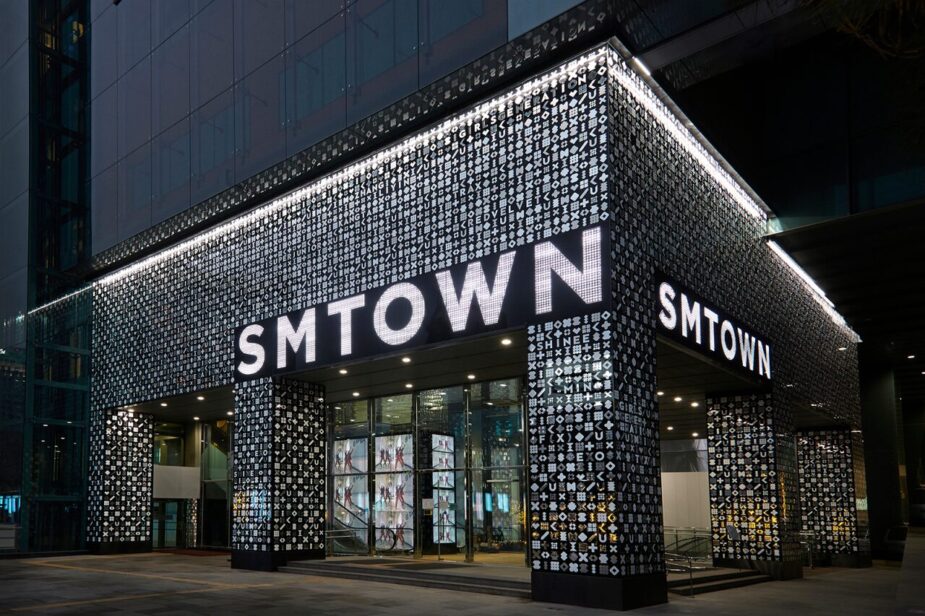
SM Entertainment, a key player under the Kakao umbrella, was a major contributor to this success story. SM Entertainment recorded ₩813 billion KRW (about $559 million USD) in revenue, marking a remarkable 22.6% increase compared to the previous year. This strong performance underscores the enduring popularity and business acumen of one of K-Pop’s original “Big 3” agencies.
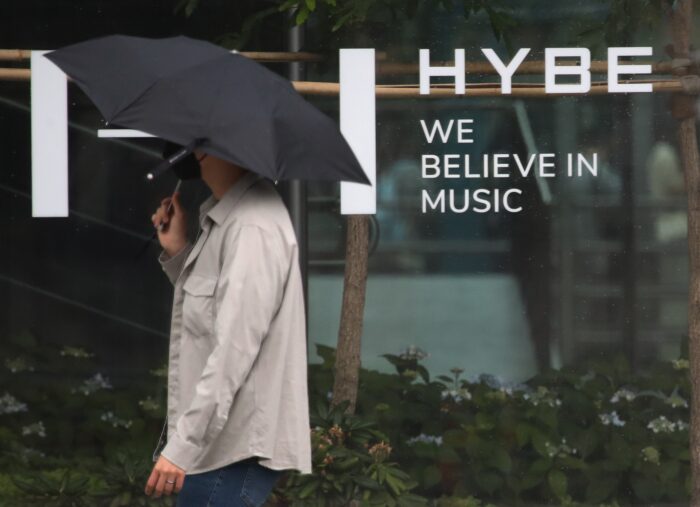
Following this shift, HYBE, home to global superstars, now ranks second. The company reported ₩1.0247 trillion (about $742 million USD) in revenue. Despite being dethroned from the top spot, HYBE’s financial results remain incredibly robust, supported by the stellar performances and strategic management of its various labels, including BigHit Music and PLEDIS Entertainment. Their diverse artist roster continues to generate immense revenue through music, tours, and merchandise.
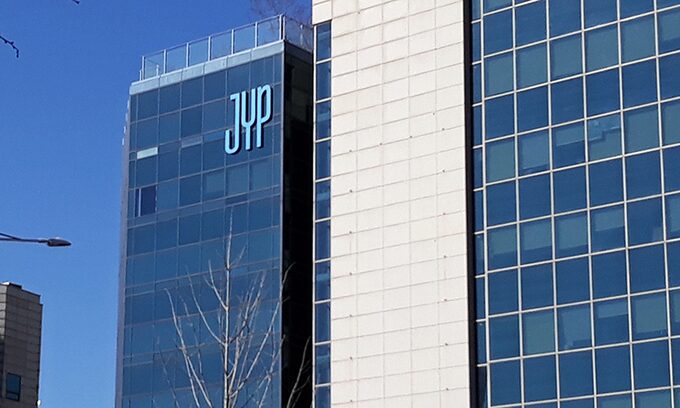
Maintaining its strong position among the industry’s elite, JYP Entertainment placed third with a solid ₩684 billion KRW (about $470 million USD) in revenue. Known for its distinct artistic vision and consistent production of popular groups, JYP continues to prove its stability and profitability in a competitive market.
Meanwhile, YG Entertainment ranked fourth with ₩339 billion KRW (about $233 million USD), demonstrating a significant comeback with a 71.3% increase compared to the previous year. This impressive growth is largely attributed to the expansion of their concert activities, showcasing the power of live performances and global tours in boosting revenue.

Looking at the broader picture, the financial might of the “Big 4” (now including Kakao/SM, HYBE, JYP, and YG) continues to dominate the industry. Together, these four major entertainment groups recorded a combined ₩3.3039 trillion (about $2.39 billion USD) in revenue, accounting for a staggering 71% of the top 30 companies’ total revenue. This concentration of wealth underscores the immense influence and reach these powerhouses hold over the global K-Pop phenomenon, shaping its future trajectory and evolution.