
BTS Takes the World Stage: K-Pop to Shine at World Cup Halftime
NEW YORK – Get ready, ARMY! The world is buzzing as football tradition is set to be tested like never before with an unprecedented halftime show at the World Cup final, and our very own BTS is leading the charge! The official rules of football could not be much clearer: “Players are entitled to an interval at halftime, not exceeding 15 minutes.”
But for July 19’s inaugural halftime show at a World Cup final, that rule is getting a massive upgrade. And the lineup for July 19’s inaugural halftime show at a World Cup final could not be much fuller: Madonna, Justin Bieber, Shakira and BTS as headliners, plus Burna Boy, a Staten Island elementary school chorus and the New York Philharmonic, conducted by Gustavo Dudamel.
This is a monumental moment, with FIFA, the World Cup’s organising body, approving the halftime spectacle in hopes of attracting more casual fans to a championship match between Spain and Argentina, expected to exceed 1 billion viewers – a staggering five times the audience of the Super Bowl. Get ready for tradition to be tested.
Tradition Meets Spectacle: The Controversy Unpacked
While purists are voicing concerns, calling the show “sacrilegious” and another example of FIFA catering to corporate interests – especially in a tournament hosted by the United States, Canada and Mexico, expanded to 48 teams, with high ticket prices and mandatory hydration breaks used for ads – for K-Pop fans, this signifies an incredible global platform for BTS. FIFA, the World Cup’s organising body, approved a halftime show in hopes that it would attract more casual fans during a championship match between Spain and Argentina that is expected to exceed more than 1 billion viewers – five times the audience of the Super Bowl.
Sports sociologist John Williams from Britain noted that football is meant to be a continuous, pressure-filled environment with minimal interruptions, where fans expect discussion of formations and fitness during the break, not a star-studded concert. But purists consider the show sacrilegious, another example of what they say is catering to corporate interests by FIFA in a tournament hosted by the United States, Canada and Mexico. It was expanded to 48 teams, featured abnormally high ticket prices and added mandatory hydration breaks that were used by some broadcasters to air advertisements. Football is meant to be a continuous pressure-filled environment with minimal interruptions, said John Williams, a sports sociologist in Britain. Fans expect discussion of formations and fitness while players are recuperating during the afternoon halftime break, not a star-studded concert. “It will just change the whole character of the event,” Williams said. “It won’t feel right.”
Behind the Scenes: Precision and Speed for a Global Show
Despite these concerns, Guy Carrington, a producer at Done+Dusted, the live entertainment event company helping to produce the halftime spectacle, reassured that preparations have been an exercise in restraint. “This is about creating an entertaining halftime show,” Carrington said, “but it’s also about doing it within the boundaries and to make sure it doesn’t feel out of place, and that it leaves the pitch exactly as we found it.” Guy Carrington, a producer at Done+Dusted, a live entertainment event company helping to produce the halftime spectacle, said preparations for the show had been an exercise in restraint.
Protecting the sacred pitch at New York New Jersey Stadium (temporarily renamed MetLife Stadium) is paramount. Carrington explained that workers will cover it with a tarp and roll out stages using a small number of carts. Remote camera systems have been rigorously tested to ensure no indentations are left for football legends like Lionel Messi and Mikel Oyarzabal. “This is about creating an entertaining halftime show,” Carrington said, “but it’s also about doing it within the boundaries and to make sure it doesn’t feel out of place, and that it leaves the pitch exactly as we found it.”
Carrington, notably, also helped produce BTS’s comeback concert in 2026, so he understands the precision and speed required for a high-stakes production. He confirmed the setup and teardown of the stages would be expedited: “It’s going to be quick.” To protect the field at New York New Jersey Stadium (the temporarily renamed MetLife Stadium), Carrington said, workers will cover it with a tarp and roll out stages with a small number of carts. Organisers have previously tested the remote camera systems that will be used to film the show to ensure they will not leave indentations on the field for Lionel Messi and Mikel Oyarzabal.
While a Super Bowl halftime break typically lasts about 25 minutes with a 12-14 minute performance, this World Cup show is aiming for an 11-minute performance within an anticipated 20-minute halftime break. Carrington, who helped produce BTS’ comeback concert in 2026, said the setup and teardown of the stages would be expedited. “It’s going to be quick,” he said. The Super Bowl halftime break typically lasts about 25 minutes, with the performance taking 12 to 14 minutes.
However, an extended halftime could still spark frustration among players and coaches. Nestor Lorenzo, Colombia’s coach, criticized similar plans for the 2024 Copa América final, citing concerns about players cooling down and affecting their fitness. The CEO of Global Citizen, the charitable organisation producing the World Cup halftime show, said the performance would last 11 minutes; The Athletic reported that FIFA is anticipating that the entire halftime break will last about 20 minutes. An extended halftime may even anger players and coaches. In 2024, Nestor Lorenzo, Colombia’s coach, criticised plans for a halftime show during the Copa América final, saying that additional time spent in the locker room could alter player routines. “This could affect the players’ fitness,” he said in a news conference. “They could cool down too much. People don’t understand what it takes to reach those levels.”
A Star-Studded Lineup with a Purpose
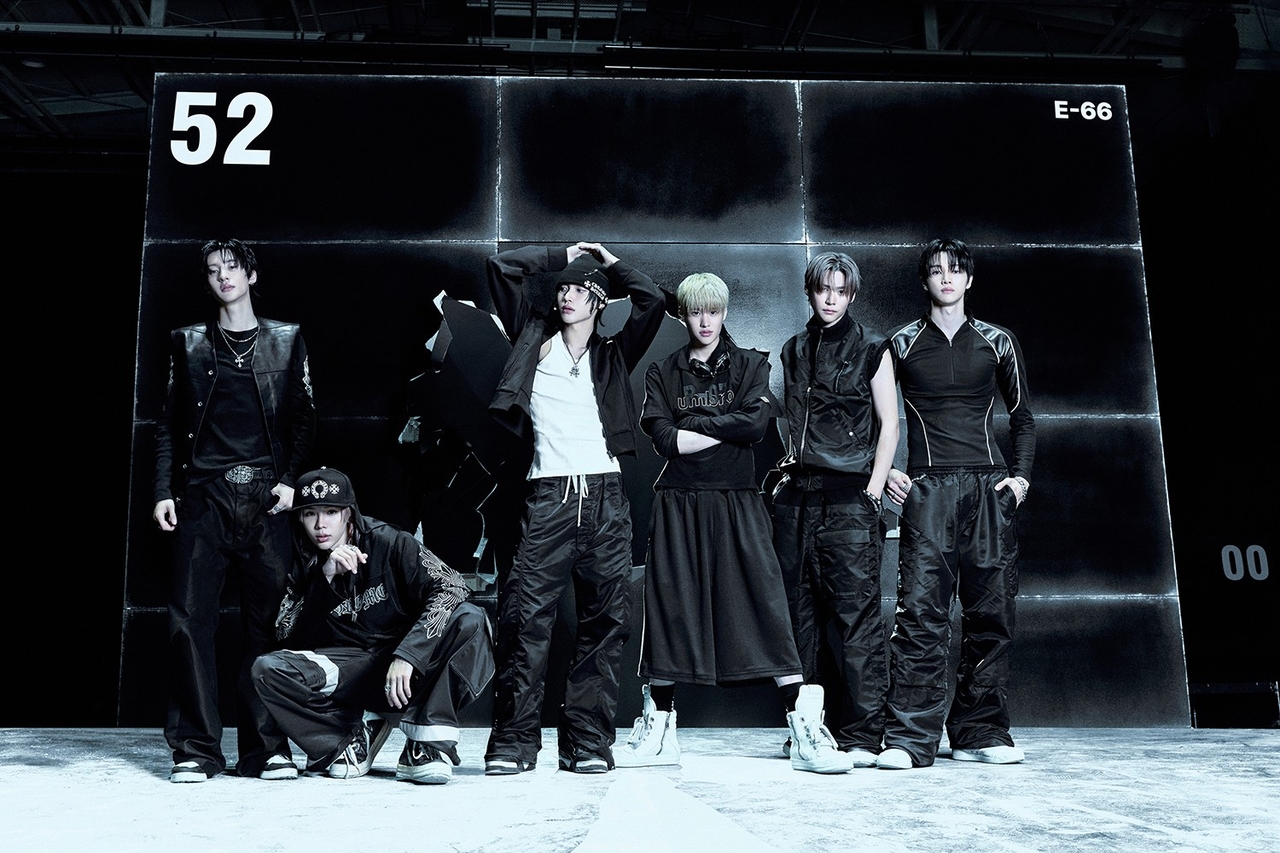
This is a unique creative challenge for the four headliners – Madonna, Justin Bieber, Shakira, and BTS – who collectively boast 13 Grammy Awards. Each could easily command a solo show, but this is about collaboration. No matter how long the show is, it is a creative challenge for the four headliners, who have 13 combined Grammy Awards and could each feasibly complete a solo show. “Everyone will have their moment, but everybody will have their moment as they contribute to the bigger picture,” Carrington said. Shakira, who created the official World Cup song, Dai Dai, featuring Burna Boy, said that sharing the stage with Jennifer Lopez for the Super Bowl halftime show in 2020 had been instructive. “These moments move incredibly fast, and every detail has to be intentional,” she said in a statement. “It’s not about fitting everything in – it’s about choosing the most impactful moments that people will remember and that will create history.”
Lessons were learned from the 2025 Club World Cup final halftime show, where a stage was erected in the stands for J Balvin, Tems, Doja Cat, and Coldplay to protect the grass, but resulted in poor sight lines for some spectators. This time, adjustments are being made. FIFA and Global Citizen learnt some lessons during a halftime show at the 2025 Club World Cup final, also at the New Jersey stadium. Organisers erected a stage in the stands to protect the grass playing surface for a performance by J Balvin, Tems, Doja Cat and Coldplay. But Hugh Evans, Global Citizen’s CEO, said the show’s sight lines were poor for some spectators in the venue.
Hugh Evans, Global Citizen’s CEO, acknowledges the mixed feelings but remains optimistic. “So long as our true north is clear, then we hope that everyone in the world will embrace that message,” Evans said. Evans said that he understood not everyone was excited by the prospect of this weekend’s halftime show but that he was optimistic it would be received well afterward.
The Global Impact of an 11-Minute Masterpiece
The very idea for this World Cup halftime show came from none other than Coldplay’s lead singer, Chris Martin, during the 2022 World Cup. Martin, who curates events for Global Citizen (a charitable organization focused on issues like hunger and education), pitched the idea to Evans, who then greenlit it with FIFA President Gianni Infantino. Martin also selected the artists for the show and drove the creative direction, emphasizing musical variety and authenticity regardless of language or genre. This inclusive approach undoubtedly played a role in bringing BTS to this global stage. The World Cup halftime show exists partly because of Chris Martin, the lead singer of Coldplay, who had the idea during the 2022 World Cup. Martin had curated events for Global Citizen, which organises music festivals for charitable issues such as hunger and education, so he called Evans with his proposal. Global Citizen then presented it to Gianni Infantino, the president of FIFA, who greenlit the plan. Martin selected the artists for the show and drove the creative direction. He declined to comment about the upcoming performance but said in an interview before 2025’s Club World Cup that he enjoyed musical variety. “The only criteria for me is, ‘Are the songs amazing?’” Martin said. “I love so many different artists, and I think as long as the music feels true and authentic, it doesn’t really matter what language or genre it is.”
Indeed, many football fans are upset, with a survey of nearly 2,100 British residents showing 55% felt negatively about a halftime show, viewing it as changing the sport for commercial interests rather than improvement. Inserting a halftime show into a premium football match has angered many fans of the world’s most popular sport. In a survey of nearly 2,100 British residents, 55 per cent said they felt negatively about a halftime show. “It’s not even so much that people feel upset that the sport is changing, but that it’s not changing for a reason to make it better,” said Brenda Elsey, a professor at Hofstra University whose research specialty includes Latin American football. “It’s not changing at the behest of the majority of fans, it’s changing at the behest of commercial interest by a very few overlords.”
However, Evans defends the show by comparing it to the 1985 Live Aid concerts and highlighting its philanthropic goal: raising US$100 million (S$129 million) for children’s education and sports access. The artists, including BTS, will not be paid, contributing to this noble cause. Evans has compared the show to the 1985 Live Aid charity concerts in Philadelphia and London, and he defended it by saying it would benefit a philanthropic fundraising initiative that hopes to raise US$100 million (S$129 million) to expand children’s education and sports access. The artists will not be paid, Evans said.
A spokesperson for Global Citizen confirmed that 350 people, including the headliners, dancers, orchestra members, and even Muppets characters, will participate. Evans explained that this large, diverse group was chosen to represent a global audience. A spokesperson for Global Citizen said that 350 people, including the headliners, dancers, orchestra members and even Muppets characters, would participate in the show.
“If someone were looking down from the universe on planet Earth and they looked at this 11 minutes,” Evans said, “they’d be like, ‘Wow, isn’t the world amazing?’ ” And with BTS’s presence, showcasing K-Pop on such a monumental world stage, we couldn’t agree more! A large group of performers was chosen, Evans said, to be representative of a global audience. “If someone were looking down from the universe on planet Earth and they looked at this 11 minutes,” Evans said, “they’d be like, ‘Wow, isn’t the world amazing?’ ” NYTIMES
This article originally appeared in The New York Times.