
LUCY’s Sangyeop Announces Marriage, Igniting “Idol Band” Identity Debate
LUCY’s Sangyeop has recently become the center of a buzzing discussion within the K-Pop community following his surprise marriage announcement. The news, while met with some well wishes, quickly ignited a debate among netizens regarding the band’s identity and the implications for its members.

On August 17, Sangyeop announced he was getting married.
Along with the announcement, the singer shared a handwritten note for fans, which was shared on theqoo. This immediately sparked a passionate discussion among netizens. The core of the debate revolves around LUCY and Sangyeop’s categorization as an “idol” or a “band” – a distinction that carries significant weight in the K-Pop landscape, especially concerning member relationships. The general understanding in the industry is that relationships are far more taboo for idols than for musicians categorized as “normal singers” or traditional bands.
The “Idol Band” Contradiction: Netizen Concerns
While some commenters extended their congratulations and support to the singer, a significant portion of the online discourse highlighted potential backlash. Many believed that any negative reactions would stem from the perception that, despite being a band, LUCY has consistently presented itself and managed its fandom in a manner akin to an idol group. This “idol-band” label, netizens argued, could lead to a wave of temporary negative sentiment among fans who might feel betrayed or confused by the mixed signals.
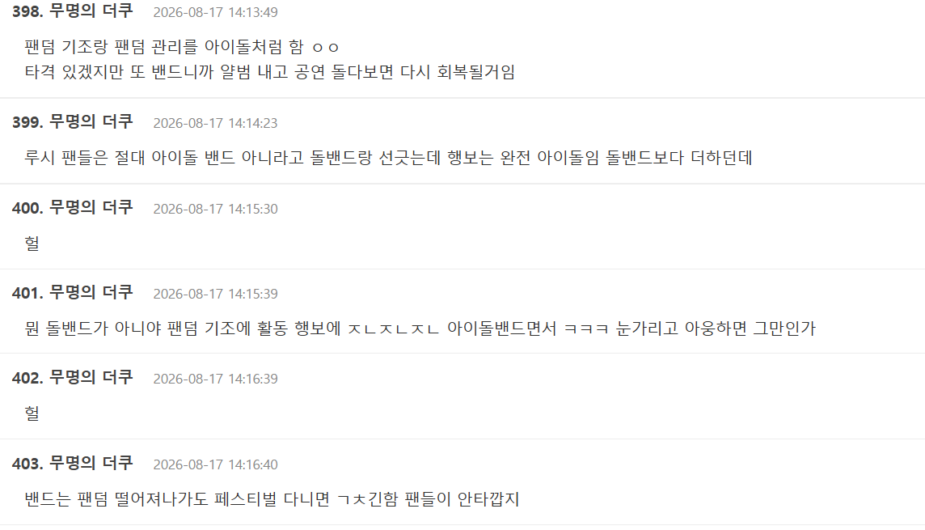
Some netizens eloquently articulated this sentiment, stating: “They manage the fandom and set the overall fandom culture like an idol group, yeah. There’ll probably be some fallout, but since they’re still a band, they’ll likely recover once they release albums and go around doing concerts.” Another critical voice added, “LUCY fans insist that they’re absolutely not an idol band and distance themselves from idol bands, but their actual activities are completely idol-like. Honestly, they’re even more like idols than typical idol bands.” The sentiment was echoed by others: “What do you mean they’re not an idol band? Their fandom culture, the way they conduct their activities, it’s extremely idol-band-like. Does pretending not to see it make it go away?” Some also expressed empathy for the fans, noting, “Even if a band loses some of its fandom, they can generally be fine if they keep playing festivals. It’s the fans who I feel bad for.”
Blurring Lines and Fan Expectations
The debate further underscored the complex expectations placed upon artists in the South Korean entertainment industry. While some praised Sangyeop and wished him well, the discussion consistently returned to the perceived discrepancy between LUCY’s self-identification and their operational methods. The unique position of “idol bands” in K-Pop often means navigating the ardent fan expectations typically reserved for idol groups, while simultaneously trying to maintain the artistic freedom and image of a traditional band.
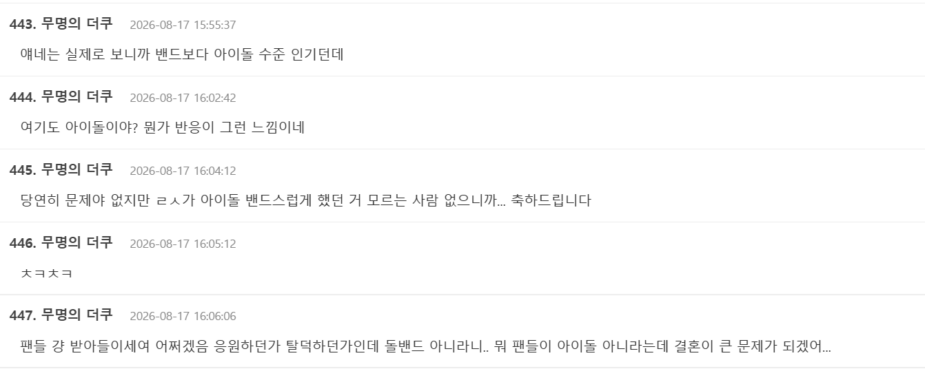
Other comments further emphasized this paradox: “Seeing them in person, they actually seem to have popularity on the level of idols rather than a regular band.” “Are they idols too? The reactions here kind of feel like that.” A conciliatory note appeared in one comment: “Of course, there’s nothing wrong with it, but nobody can deny that LUCY has presented themselves in an idol-band kind of way… Congratulations.” Finally, some urged fans to accept the reality: “Fans, just accept it. What else can you do? Either support them or leave the fandom. Saying they’re not an idol band is ridiculous… If the fans themselves say they’re not idols, then why would marriage be such a big deal?” The discussion clearly shows a divide, reflecting the unique pressures faced by K-Pop artists who blur the lines between traditional band and idol group concepts.