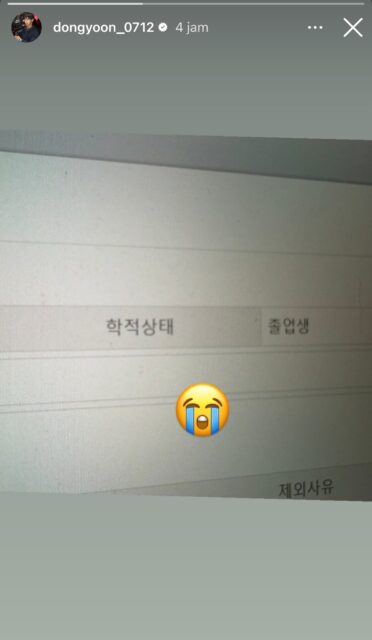
The K-Pop world is buzzing with the latest news from global superstars BTS, as all members have officially confirmed their decision regarding this year’s Grammy Awards. In a move that has sent ripples across the industry and among their devoted ARMY, the septet collectively agreed not to submit an entry for consideration, a declaration that has garnered significant and widespread attention.
BTS Opts Out: The Grammy Controversy Deepens
This pivotal decision, rather than being a simple oversight, appears intrinsically connected to the recent addition of the new Asian Pop category to the awards. This particular development has been met with considerable criticism and many fans and industry observers have deemed it a problematic, if not outright negative, move. The Recording Academy’s CEO responded swiftly to this development, expressing notable disappointment over BTS’s impactful decision, underscoring the weight of the group’s absence.
The discourse intensified further when a person closely involved in the creation of the controversial award category also spoke out, only to be met with similarly harsh reactions from the public and K-Pop enthusiasts alike.
Committee Member Responds: “Torn Down” by BTS
Zeena Koda, a respected member of the advisory committee for The Recording Academy’s Gold Music Alliance, took to social media to share several posts regarding the group’s impactful declaration. She initially seemed to express confusion and frustration, framing the situation from her perspective and defending the academy’s intentions.
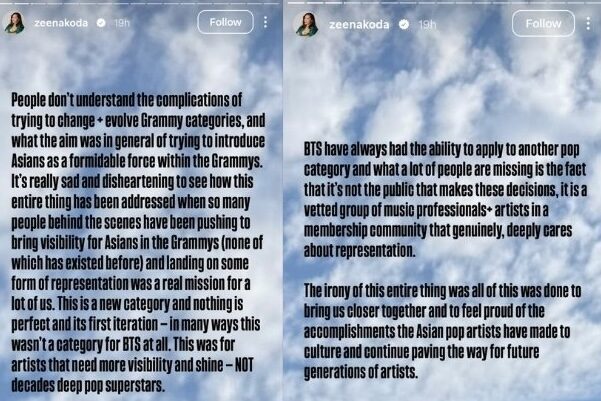 Koda continued, passionately stating that they, as the award creators, were “torn down” by BTS’s decision and the subsequent fan reactions. She asserted that those criticizing the move and attacking the academy did not truly understand the profound and positive purpose behind the category’s introduction, suggesting a misunderstanding of their intentions and the collaborative effort involved.
People don’t understand the complications of trying to change + evolve Grammy categories, and what the aim was in general of trying to introduce Asians as a formidable force within the Grammys.
It’s really sad and disheartening to see how this entire thing has been addressed when so many people behind the scenes have been pushing to bring visibility for Asians in the Grammys (none of which has existed before), and landing on some form of representation was a real mission for a lot of us. This is a new category and nothing is perfect and its first iteration – in many ways this wasn’t a category for BTS at all. This was for artists that need more visibility and shine – NOT decades deep pop superstars.
BTS have always had the ability to apply to another pop category and what a lot of people are missing is the fact that it’s not the public that makes these decisions, it is a vetted group of music professionals artists in a membership community that genuinely, deeply cares about representation.
The irony of this entire thing was all of this was done to bring us closer together and to feel proud of the accomplishments the Asian pop artists have made to culture and continue paving the way for future generations of artists.
— Posts
However, her explanation did little to quell the rising tide of discontent among fans and critics alike.
Fan Concerns & The Inclusivity Debate
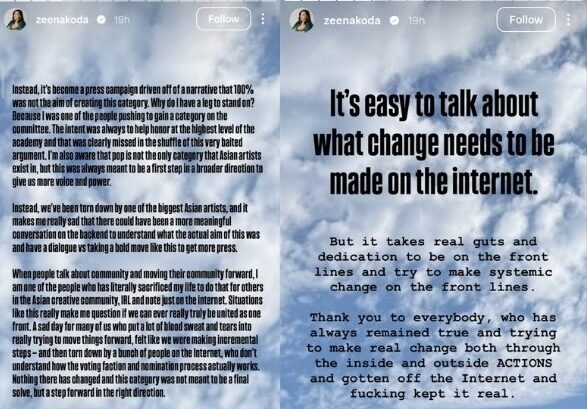
Instead, it’s become a press campaign driven by a narrative that 100% was not the aim of creating this category. Why do I have a leg to stand on?
Because I was one of the people pushing to gain a category on the committee. The intent was always to help honor at the highest level of the academy, and that was clearly missed in the shuffle of this very baited argument. I’m also aware that pop is not the only category that Asian artists exist in, but this was always meant to be a first step in a broader direction to give us more voice and power.
Instead, we’ve been torn down by one of the biggest Asian artists, and it makes me really sad that there could have been a more meaningful conversation on the backend to understand what the actual aim of this was and have a dialogue, rather than taking a bold move like this to get more press.
Ween people talk about community and moving their community forward, I’m one of the people who has literally sacrificed my life to do that for others. In the Asian creative community, IRL and not just on the internet. Situations like this really make me question if we can ever really, truly be united as one front. A sad day for many of us who put a lot of blood, sweat, and tears into it, really trying to move things forward, felt like we were making incremental steps, and then torn down by a bunch of people on the Internet, who don’t understand how the voting faction and nomination process actually works.
Nothing there has changed, and this category was not meant to be a final solve, but a step forward in the right direction.
It’s easy to talk about what change need to be made on the internet. But it takes real guts and dedication to be on the front lines and try to make systemic change on the front lines. Thank you to everybody, who has always remained true and trying to make real change both through the inside and outside ACTIONS and gotten off the Internet and fucking kept it real.
— Post
Many reacted vehemently to Koda’s posts, immediately raising significant concerns about what they perceived as a potentially problematic thought process behind the award and, crucially, its intended recipients. Fans argued that such a category could inadvertently silo K-Pop and other Asian music, rather than integrating it into mainstream categories, echoing long-standing criticisms of how Western award shows treat non-Western artists. This situation reignites the perennial debate about genuine inclusivity versus tokenism in major awards.
The fact that the Recording Academy people sat in a boardroom, looked at the most culturally, linguistically and musically diverse continent on Earth, and concluded that the solution was to throw everyone into one “Asian Pop” category is exactly why this deserves criticism.
BTS were nothing but respectful in their statements, they made NO DEMANDS, cussed no one out, nothing, just stated what they felt and moved on.
This woman feeling torn down by that simple statement need to take a hard look at what they are doing via this category but instead… https://t.co/4GtJMAP33y
— MJ ⊙⊝⊜ (@mj_alwayss) July 30, 2026
No amount of backtracking and gaslighting is gonna change the meaning and intent of a segregated category that is clear to the naked eyes. They thought they could pull the same horseshit as “Afro beats” that shoved all African artists into 1 category and everyone would just… https://t.co/KX15lVxsuF
— Rize⁷ (@rize07addict) July 30, 2026
This ongoing conversation highlights the delicate balance between recognizing diverse music and ensuring true inclusivity, a debate that BTS’s powerful stance has brought sharply into focus. The Grammys’ future approach to K-Pop and global music will undoubtedly be shaped by this significant moment, pushing for a more equitable recognition system.